Artist Oskar Kokoschka and Alma Mahler
Oskar Kokoschka (1886–1980) was an Austrian expressionist painter and writer, known for his emotionally charged portraits and turbulent, visionary style. His work often reflected psychological intensity, and few periods in his life were as artistically explosive as the years he spent entangled with Alma Mahler.
Alma Mahler (1879–1964), widow of composer Gustav Mahler, was a composer, muse, and one of the most magnetic cultural figures in early 20th‑century Vienna. When she met Kokoschka in 1912, he was already considered the “wildest beast” of the Viennese avant‑garde. Their relationship quickly became an amour fou—passionate, volatile, and creatively consuming.
Their Relationship
Their affair lasted from 1912 to 1915 and was marked by intense emotional dependency, jealousy, and artistic obsession. Alma modeled for Kokoschka, and he painted her repeatedly, most famously in The Bride of the Wind (1913), a swirling, dreamlike portrait of their love and its impending doom.
The relationship deteriorated under the weight of Kokoschka’s possessiveness and Alma’s desire for independence. When she became pregnant and later ended the pregnancy, Kokoschka was devastated. Her eventual marriage to architect Walter Gropius in 1915 broke him completely.
The Story of the Doll
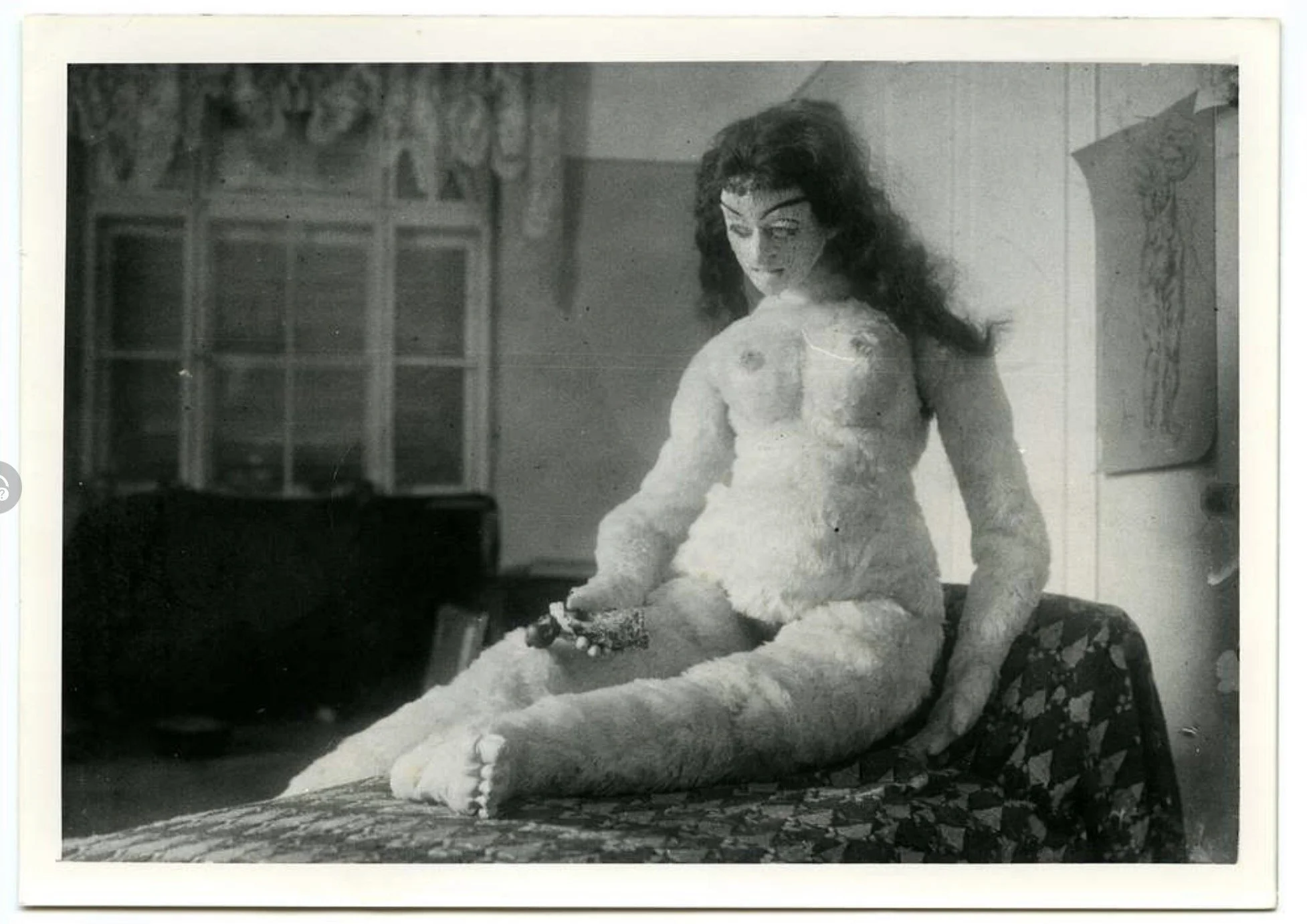
In his grief and desperation, Kokoschka commissioned a Munich doll‑maker to create a life‑size replica of Alma—down to the smallest detail—hoping it would console him after their breakup. The result, however, was a stiff, awkward construction of fabric and wood wool, far from the living presence he longed for.
He lived with the doll for a time, dressing it, taking it to the opera, and even posing it for paintings. But the illusion could not hold. In 1919, during a wild party in his Dresden studio, Kokoschka symbolically ended the obsession: he beheaded the doll in front of the guests and declared himself free of Alma’s hold over him